Showing posts with label book review. Show all posts

Tuesday, 5 May 2015

Review: Love Letters to the Dead


When I picked up Ava Dellaira's Love Letter's to the Dead, a book that came to me through recommendations on Amazon, I was intrigued.  The epistolary form isn't a type of novel I come across all too often - in fact, I can count the number of them I've read on one hand.  While I enjoyed the wonderfully poignant book, and thought initially it was a great idea for a novel, I confess I was disappointed by the similarity of the plot to Stephen Chbosky's The Perks of Being a Wallflower.  In truth, while there were small differences between the family lives of Dellaira's main character, Laurel, and Chbosky's Charlie, by the end of the book I felt like the only real difference was the fact that the two characters were of separate genders. 

Although this coming-of-age story does bear similarities to the earlier high school set novel of Dellaira's mentor, perhaps those do not matter.  Perhaps the existence of Dellaira's novel is still important.  Reading it, I felt the exploration of sexual abuse was perhaps more in depth than in Chbosky's Perks and that the book would be informative and helpful to any teenagers who might find themselves or know someone in a similar situation.  With a female protagonist too, the book speaks well to young girls. 

The idea of the novel, Laurel writing letters to dead celebrities, was what first convinced me to make the purchase.  I felt there was a lot of potential for comedy as well as more sincere interactions.  While there was perhaps little humour in the letters, I enjoyed them nonetheless.  The choice of celebrities was diverse to an extent, but maybe a little too old for the teenage audience who may not be familiar with Johnny Cash, Judy Garland and their peers.  

Overall, this was a heartfelt - and heart-wrenching - exploration of grief and coping mechanisms which despite the melancholy plot was a tremendous read.  Perhaps it lacked the development of writing style that Chbosky's Charlie goes through in the course of The Perks of Being a Wallflower, but that didn't lessen its impact. 

Sunday, 18 January 2015

Review: Is Everyone Hanging Out Without Me? (And Other Concerns)


I'm not much of an autobiographical reader.  I confess the only other biography I can remember reading was Billie Piper's back when she had just left Doctor Who and I was still obsessed with her.  This was not the case with one of the latest books I've read.  What caught my eye about Mindy Kaling's book was not her name or her fame (because I've never even watched an episode of The Mindy Project or the US version of The Office) but the title because, let's face it, we're all concerned about whether our friends are hanging out without us.  And if I'm being 100% honest... being a little bit slow-witted, I was so wrapped up in the title that it didn't actually even occur to me that this was an autobiography until I started reading it...

That being said, I'm immensely glad I did read it because Mindy Kaling is ridiculously funny.  Even just in print.  I loved both her big life stories and the small anecdotal ones that accompanied them.  I outright laughed at her various definitions of synonyms for 'chubby' and a number of other moments - in fact, I practically read the whole book aloud to my mother, who I know would probably have much rather read the book herself. 

Biography  is an odd genre, I've always found.  By and large, you're only going to be interested in reading it if you either like the person - and I mean really like the person - or want to brush up on your historical/sporting/political knowledge.  Considering that I wouldn't call myself a fan of Kaling, I'm surprised that this book was so enjoyable to me.  Since reading, I haven't gone and watched any of her sketches or films or shows - apart from those that I had already seen - nor do I find that my opinion of her has changed at all.  So it leaves me wondering what exactly it was about this particular autobiography that made it so successful in my eyes?

Coming from a comedian, the book was always going to be undeniably humorous.  As an autobiography it was obviously going to feature a number of different personal stories and memories.  I think the surprising factor is the message that goes along with this though.  In Kaling's introduction, she claims the book is about:
"romance, female friendships, unfair situations that now seem funny in retrospect, unfair situations that I still don't think are funny, Hollywood, heartache and my childhood."
Obviously, it's a work more suited to women, as Kaling goes on to sarcastically quip: 'Just that really hard-core masculine stuff men love to read about.'  What works about the book, about Mindy's words however, is that it does give advice.  And while she claims that she's not the best person to be giving this advice, it's still responsible and what most of us would say.  The issues explored in this book are the kind that any girl goes through at some point in her life, though quite likely mainly in teenage years.  While some of the things Kaling wrote, I have found through my own experience; I couldn't help wishing that back when I had friends hanging out without me, I'd had someone there giving the advice that Mindy does.

In short, this is the book I wish I'd had back when I was still in secondary school.  This is the book they should be giving out to girls to help with those friendship dramas and questions and dilemmas with boys.  It's the perfect handbook for navigating the troubles of being a teenage girl, friendly helpful advice interspersed with Kaling's comical experiences and often random thoughts.  While some critics have said that the book would be good if it weren't for the shortfall of seeming to go off on a tangent, I've come to see this as one of it's strongest points.  In writing and editing, I'm sure that Kaling would have been aware of this problem and has purposefully left those moments about men wearing peacoats, Pierce Brosnan's chest hair and numerous lists of things in the book because going off track is one of her personality traits.  What kind of autobiography would it be if these moments weren't included?  Certainly not as truthful an attempt.

In including them, Kaling shows she's unafraid of being herself and suggests that we should embrace our weird and unusual personalities, that we should love what makes us unique.  What better message is there?

Tuesday, 28 October 2014

Review: Fangirl


So I'm always kind of behind the times when it comes to reading and reviewing books, right? Oh well, I'm still going to talk all about Rainbow Rowell's Fangirl because it was that awesome.

The first thing I'd like to say is that I don't think I've ever read anything that provides such an accurate depiction of  what it's like to be a teenager with anxiety issues or mental illness. As a sufferer myself, I couldn't help seeing myself in the pages, even though I never necessarily displayed the same symptoms as Rowell's character, Cath. On a personal level I was immensely pleased that a book that portrayed the fangirl (or fanboy, you know) lifestyle as a positive thing, as a coping strategy and something that isn't completely dorky or unattractive.

Even if you're not a sufferer of a mental disorder, worry not. Fangirl is still a novel that feels like the next to top the list of 'coming of age' style stories.  Above all, Rowell's work is a story about change and for any teenager about to head off to university - or college - this is a book that reminds us it's okay to be scared by taking those big steps that take us into adulthood. It's a story of family, friendship, relationships and remembering that everything isn't always as it seems. It's a story of life lessons. (It may be a bit cliché but this book is everything.)

The only complaint I've heard is that some people found Rainbow Rowell's pace dawdled at times. I can't say it was a problem that I personally encountered - I stayed up past 2am to devour all 500 pages of it in one night. For some I'd imagine the issue stems from Cath's fanfiction pieces (meant to resemble something written for the Draco/Harry ship in the Harry Potter fandom) that crop up between chapters usually. As those aren't integral to the story, I'd say that if you find them slowing the plot of the story too much, skip 'em. You won't be missing anything, save for getting a slight kick out of a tiny pop-culture reference if you're familiar with the Harry Potter fandom.

Those pop-culture references were something that I felt added fun to the book. Not only is the fanfiction based on Harry Potter but there are mentions of Taylor Swift, Twilight and Kanye West to name just a few.

While it was possibly a tad predictable, I did find there were a few surprises I didn't expect and that the book handled multiple different storylines well. While some of them ended happily for Cath, I found that those that didn't seem fully resolved didn't really bother me. Normally, I'm sure I would have a problem with this, but in some ways if everything turned out fine for Rowell's character's, the book would feel a bit contrived.

(I feel like I'm normally a lot more critical when I'm reviewing novels. The fact that this novel appealed to me on such a personal, relatable level has made it hard for me to do so - apologies!)

Sunday, 12 October 2014

Review: Gone Girl


Okay. Gone Girl. So I've now seen the film in addition to having read the book, and it seemed like the perfect time to do my first movie review. I'm going to do my best to write this with no spoilers, which is probably going to be insanely hard, so no promises.

One of the main things that struck me about Gillian Flynn's book was that neither of the main characters were likeable, something which I feel is rather unusual. Flaws, to a certain extent are good - nobody wants to read about a Mary Sue because nobody is perfect, and although we like to read books to escape, we still need some realism - but while reading Gone Girl, I almost felt that Amy and Nick were too flawed. Although, the reasons for their individual issues are explained and make them understandable, it still leaves you feeling uncertain as to whether you actually enjoyed the book.

In some ways the film was exactly the same.  For me, Ben Affleck and Rosamund Pike were absolutely perfect in their respective roles, bringing Nick and Amy Dunne to life exactly as they appear in the book.  Affleck, in particular, seemed to excel at displaying Nick's more carefree and blasé attitude with mainly his body language, without the benefit of being able to hear his thoughts as we do in the book.  Visually, the changes that Rosamund Pike went through really emphasised how easily Amy machinates and adapts to the people around her.

Perhaps the fact that Gillian Flynn was also the screenwriter for the project helped keep the film truer to the book.  Although it was advertised that Flynn had penned a different ending for the film, ultimately (and disappointingly), there's actually not that much difference between the two.  There is no new information for anyone familiar with the novel; just some editing that cuts out one or two parts of the storyline to no great effect.

Editorially-speaking, the film is a masterpiece, jerkily cutting together two or three storylines that work independently of each other to sustain the mystery surround Amy's disappearance and keep the audience's confusion going for as long as possible.  However, due to the difficulties of condensing the book down into a film that lasts two hours and twenty minutes, a few of the characters suffered.  One character was completely cut from the film, and the background of Desi Collins, played by Neil Patrick Harris, was severely diminished, leaving questions about what exactly his history with Amy is.  As the focus of the film is slit three ways, some of the background for why Amy and Nick's personalities developed as such is left out of the film, and only hinted at with a few seconds of a scene involving Nick's father and a few mentions of the Amazing Amy book series written by the Elliots, leaving much up to the audience's imagination.  For Flynn, this probably isn't an issue and could even be something that was perhaps done on purpose so that more people will buy the book!  For the director, David Fincher, however, this is more of a criticism.

A second issue I had could have just been the cinema and/or where we were sat, but at times the sound effects - camera shutters and a thudding heartbeat - were annoyingly distracting since they were so loud for the type of stuff that is usually just left to the background.

Thematically, the film is gloriously dark, more so than the book, eschewing any ideas about the possibility of too much violence, gore and explicit sexual content - earning itself an 18 rating.  Knowing what was coming next however, I found that I was morbidly sniggering through quite a portion of the film.

Luckily, that's not perhaps as odd as it first sounds.  Although advertised as a mystery-thriller, Gone Girl isn't entirely devoid of humour.  One or two of the characters seemed, in fact, to only really exist for such a purpose.  Officer Gilpin is one such figure.  Though Gilpin is one of the police officers in the book, it didn't feel like his character was especially necessary in terms of the plot direction.  His amusing one liners were needed though as the film progressed, becoming ever more sinister.  Having a character that could, in my opinion, so easily have been cut from the film was great to see too.

If there was one thing I wish had been done differently though, it's that more time was spent showing the personalities of Amy's parents.

Despite those few criticisms and the fact that I was aware of the entirety of the plot, the film kept me interested and eager to see what was next.  It was still entertaining - though that doesn't seem like the right word for such a thriller with such a psychological impact.  My conclusion after all of this is that regardless of whether you've read the book/just know the storyline, it's the perfect thriller - just, if you haven't read the novel, have fun trying to work out what's going on! And enjoy coming out of the cinema with deep, philosophical questions and probably more confusion than you walked into the screen room with.

Thursday, 14 August 2014

Review: The Book of Life


It's been an age since my last review, I know.  But I finally found the time to read The Book of Life by Deborah Harkness.  The third book in Harkness’ All Souls Trilogy was one that I had eagerly awaited for the best part of a year, and on the whole it certainly did not disappoint.  I know the title makes it sound a bit philosophical; I can assure you, though there is a strong focus on origins and morals, humanity and belonging, the book is anything but.  As the third in a series, I should probably expand a little on the trilogy as a whole.  The series begins with A Discovery of Witches, and as the title suggests, it’s clearly fantastical in genre.  But, as the trilogy has gone on and developed, I feel as though it is less securely seated in that genre, and actually falls into three different categories simultaneously.  While the books are set (primarily) in modern day, the past is featured prominently in the books.  The heroine of the trilogy, witch Diana Bishop, is a historian and scholar who therefore provides much of the focus on history and helps introduce the books as historical novels.  The third genre, romance, comes to the fore much more in the second novel, Shadow of Night, and in the subsequent book.

Obviously, featuring supernatural beings, with a romance between a vampire and a non-vampire to boot, the All Souls Trilogy bears a remarkable resemblance to The Twilight Saga.  During the first two books, this wasn’t very bothersome – the differences between the two series were big enough that I didn’t actually notice how similar Harkness’ work was until I began reading The Book of Life.  While plot-wise the main similarities are limited to the romance between the series protagonists, Matthew de Clairmont (a vampire) and Diana Bishop, and the difficulties that come with different creatures living side-by-side (the wolf pack and the Cullens, anyone?), I did notice that Harkness also had a love triangle much like Edward, Bella and Jacob – no clues as to which unlucky characters are involved in the relationship in the All Souls Trilogy though.  For many in the generation of Twilight readers, I’m sure this has been a common theme they have come across in various works.  I find I’m a little bit fed up of love triangles if I’m honest.  Luckily, the love triangle in The Book of Life doesn’t form as much of the plot of the All Souls Trilogy as it does in Stephanie Meyer’s books.

Despite the semblance to The Twilight Saga, as novels aimed at adults rather than teenagers, the All Souls Trilogy is much subtler in dealing with the typical ‘dark fantasy’ issues that come from love between two people who aren’t from the same species.  Over the course of the three books, this occurs alongside other storylines, the most important of which are finding and understanding an historical manuscript known as Ashmole 782 and helping Diana to use her magic.  Because these other plots form such a large part of the narrative, the angst-love issues are much less overbearing, leaving what romance remains as quite charming. With my main criticism taken care of, let’s take a look at my biggest praise: the clever way Deborah Harkness has woven history into her novels.


Historian, Diana Bishop, studies medieval alchemical texts.  That alone is quite an unusual theme in the majority of fantasy novels, or at least in those that I have read.  What's more though, is that the alchemical principles Harkness' protagonist studies and explains, are actually integral to the plot of the trilogy as well as creating the interesting world us readers find ourselves in.  
The importance of these scientific, alchemical details are seem to be an influential factor in the design of the book jackets.  Even the British cover of The Book of Life resembles a DNA helix.  As amazing as these covers look (even if I am more partial to the British ones that I have in my collection), remember not to judge a book by its cover.  Harkness' trilogy is far more than an account of alchemical procedures.


SPOILER ALERT


One of the things I really enjoyed through the series as a whole was how it almost felt timeless.  Although the main events of Shadow of Night are thoroughly dated due to Diana and Matthew's trip into the 1500s, the parts of the trilogy that take place in modern day feel like they could have taken place five years ago or in five years time.  The fact that Diana Bishop has the ability to timewalk, leaving readers wondering what other times she may eventually take a tour through - the future, perhaps? - only adds to this feeling, along with the numerous settings throughout the trilogy.  Courcelles-de-Touraine (France), Oxford (UK), New Haven (Connecticut, USA), London (UK), Prague (Czech Republic), Venice (Italy) and Madison (Wisconsin, USA) are just a few of the stand-out places Diana and Matthew visit, keeping the novels fresh and exciting, with a host of different characters and atmospheres.  Sept-Tours (the castle at Courelles-de-Touraine) and the use of old educational institutions such as Oxford University and Yale University help to base the trilogy in the past, bringing a sense of elegance and exclusivity.


A second surprise was Harkness' incredibly forward thinking, featuring gay relationships, depicted in non-stereotypical ways.


On the whole, Harkness' trilogy feels sophisticated, a perfect amalgamation of various themes and issues.  I've not read widely in the dark fantasy genre, but The Book of Life certainly feels more light-hearted than the books I am familiar with.  This series is one that would most likely appeal to any fans of Twilight, the House of Night books or the Night World series, with which it is certainly comparable.


Thursday, 15 May 2014

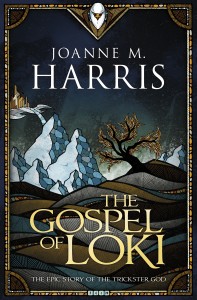
Review: The Gospel of Loki


A book truly epic in nature. When I saw author of Chocolat, Joanne Harris' latest work crop up in my Amazon recommendations, I had no idea what to expect of the book. I confess, the majority of the reason I decided to buy the book was because I am one of those annoying fangirls who wants to squeal every time Tom Hiddleston appears as Loki in Marvel's films, and the idea of learning more about Norse mythology appealed to me. Although I found Harris' book unusual and difficult to grow accustomed to at first, by the time I reached the end, I found I had really enjoyed The Gospel of Loki.

Told in first person narrative, Harris' novel is a mash-up of modern slang and old tales. The first few chapters take some perseverance, but once Loki joins Odin in Asgard, the pace really picks up and the trickster god's biography has a number of humorous points. As a classicist, reading the novel it was interesting to note the similarities with traditional epic works, and where Harris had made the genre her own - most notably with the use of first person. Loki's prevalent voice makes the book an ideal introduction for newcomers to Norse mythology, though of course one should not expect Harris to have stayed 100% true to the myths. Creative license, people. Indeed, on her website, Harris claims the novel is only 75% true to her original source material.

With Loki's roguish and slippery-customer personality front and centre, the novel is almost certain to appeal to anybody who is still waiting for Marvel to announce a spin-off from Thor and The Avengers, revolving solely around Tom Hiddleston's incarnation of the horn-helmeted god. However, fans should expect to be surprised by Loki's origin, which is substantially different from the story many people will have become familiar with if they read any of Marvel's comics or watched the films. Anyone looking to find out something new about more of the background characters will be disappointed to see that for others in the stories, readers barely see anything more than a reflection off a mirror. Loki and Odin's motivations form a large part of the plot, but Thor, Sif, Heimdall, et al are barely given the time of day. For a 320 page book though, it would be slightly absurd to expect anything different.

Stereotypically, Loki falls into the recent trend of the popular villain, but at the same time because we are told all of the stories from his perspective, every action is justified.  Even though this style of narrative allows us to sympathise with Loki, it's also easy to recognise how flawed his character is. There are a number of questions that accompany the first person narrative; primarily though, can we trust Loki to tell us the truth? In truth, because the narration is so one-sided, it's hard to answer this question. It's probably a question, and indeed a character, where our opinions will differ person to person. In my view, Loki fully believes that his actions are justified, but he's almost incomprehensibly selfish and I don't believe he really sees anything from anyone else's point of view. What he tells us is the truth to him, but to Odin or one of the other secondary characters, it may be total fabrication. Harris' book is perhaps the first book I've read where I was highly aware that perhaps what I was reading mightn't be the truth, perhaps because Loki's character was handled with such finesse.

No doubt, it isn't a novel that will appeal to everyone, and certainly making it through the first three chapters could be a battle for some - even though they are ridiculously short - but The Gospel of Loki is definitely a thought-provoking book for any reader and I would recommend people at least give it a chance just on the basis that stylistically it is so unique. Regardless of whether you're a fan of Norse lore, it is so remarkable to see something so similar to the older epic tradition.

Sunday, 16 February 2014

Review: Bridget Jones Diary


Many months ago now, I dipped into my Student Loan to purchase myself a copy of Bridget Jones' Diary by Helen Fielding. Having seen both the films based off of Helen's books a number of times, I was sure I would very much enjoy reading about our favourite publisher/news reporter/singleton-turned-happy-in-love-gal, particularly as I was one of many fans to rejoice at the news that there was a third film in the works, and a new book soon to be hitting the shelves. As I write this I am almost finished with Fielding's second book in this series and contemplating whether I will be buying a copy of the third book, Mad About the Boy.

I should probably say that I'm assuming that anyone who happens to read this has not been living under a rock for the last fifteen years and therefore has at least some idea of what this series is about. If not, have no fear (Zorro is here and he can quickly bring you up to speed).

Bridget Jones is your average 30 year old woman. Living in London and working as an assistant at a publishing house, Bridget begins a diary that recounts her woes and misfortunes through her career, relationships and unsuccessful dieting attempts.
Now that that small summary is out of the way, let's dig deeper...

Beginning the first book - having bought myself the omnibus edition which also included Bridget Jones: The Edge of Reason - I was delighted to find that the film adaptation had stayed so close to the original work of Helen Fielding. Despite not watching the film for a few years, I could easily recognise portions of dialogue which were exactly the same, making me love the films that much more. As an avid reader, films, or indeed tv shows for that matter, that stay very true to their origins satisfy me more than a large serving of chocolate sponge pudding and chocolate custard, which is saying something since I've been craving that particular dessert since the start of Spring term.

Moving on from my own eating habits, let's have a look at Bridget's. In today's size-pressured society, low self-esteem and body confidence is something I'm sure we can all relate to. Bridget's struggle with her weight and diet is both comforting and relatable. I can assure you, that although I may only have just turned twenty a few months back, I found I could picture myself in Bridget's shoes very clearly and have to commend Helen Fielding for her creation of a character that although fundamentally unique, can also be recognised within ourselves.

What's more, although we are loathe to admit it, we all make rather stupid mistakes sometimes or say things which are deemed particularly 'blonde'. Bridget also embodies this trait, perhaps more spectacularly than some of us, which makes the books all the more enjoyable. One particular incident which was not part of the film adaptation of Bridget Jones: The Edge of Reason springs to mind here.

SPOILER ALERT

Whilst trying to advance with her career, Bridget briefly delves into the world of newspaper reporting and interviewing. I was pleasantly surprised by the part that Colin Firth plays in the second book of Helen Fielding's series, being Bridget's first - and last - celebrity interviewee in an embarrassingly awkward meeting in which Bridget repeatedly wants to know more about that scene in Pride and Prejudice. Despite the awkwardness, the write up - a complete, unedited transcript of the recording - published in the Independent is highly amusing, and all the more so since it is something that was left out of the film script, or perhaps later cut during editing.

In terms of the modern spin on Pride and Prejudice, it's artfully done in my opinion. The comparisons between Mr Darcy and everyone's favourite boyfriend of Bridget's, Mark Darcy, and those of Mr Wickham and womaniser Daniel Cleaver are subtle unless one is looking outright for their similarities. If you're completely engrossed in the story and in the characters, it's possible to overlook the inspiration for the story, particularly as Bridget Jones represents a different kind of heroine than Elizabeth Bennett.

All in all both books have been enjoyable to read, with many such moments. My only qualm with both of Fielding's books is that they are not the kind of literature one can pick up and read all day when it's pouring with rain and you're shut inside. Unfortunately, the diary format begins to feel a bit too repetitive after an hour or so, and the books become something that you pick up every few days and peruse more casually. However, if that's the kind of reader you are, then Bridget Jones Diary and Bridget Jones: The Edge of Reason are perfect for you. If you have seen either of the film adaptations for these books, I would instantly recommend them, regardless of whether you even enjoyed the movies simply because films and books will always be different. If you liked the films, you're bound to enjoy the books as they are fundamentally the same. However, if you did not enjoy the movies, say because they're mushy chick-flicks, the books do have a different feel, as they are more character-intensive.

Does this mean that I - or indeed you too - should return to the world of Bridget Jones and continue her story with Mad About the Boy?

As a large Mark Darcy fan, I'm not sure I personally will be able to cope with his absence in Helen Fielding's third Bridget Jones book. However, if you've enjoyed the first two offerings of this series, I see no reason why you shouldn't enjoy the third - unless you're like me, of course, and are far too emotionally attached to believe Mark Darcy could ever die and widow Bridget.